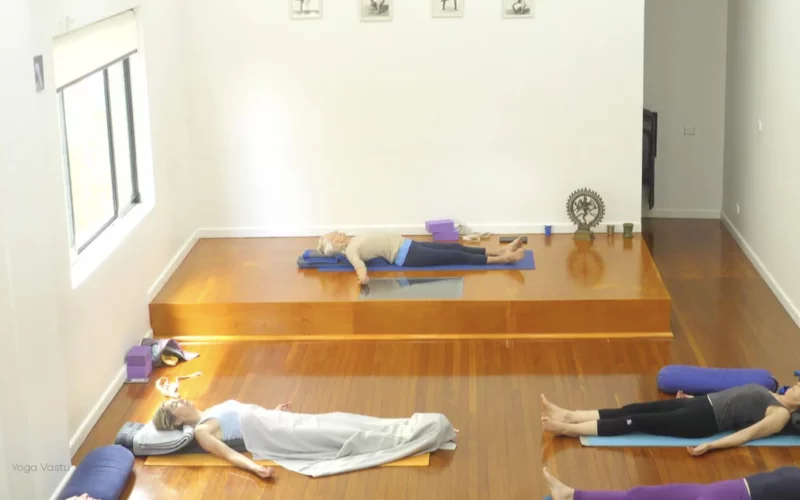
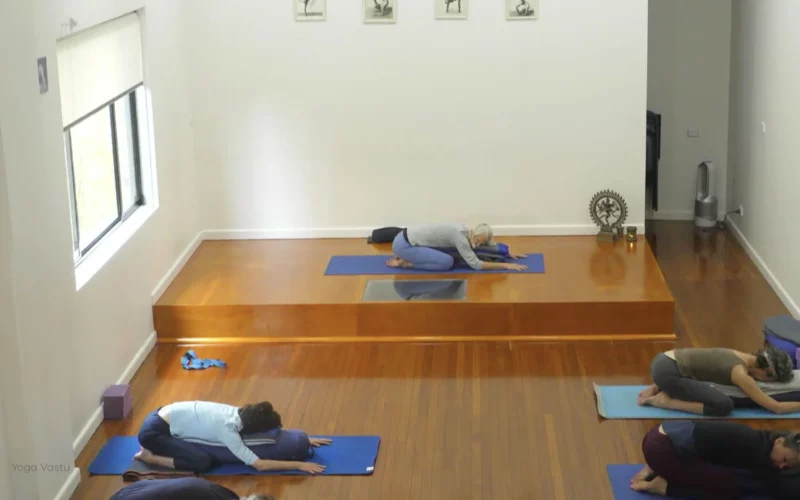
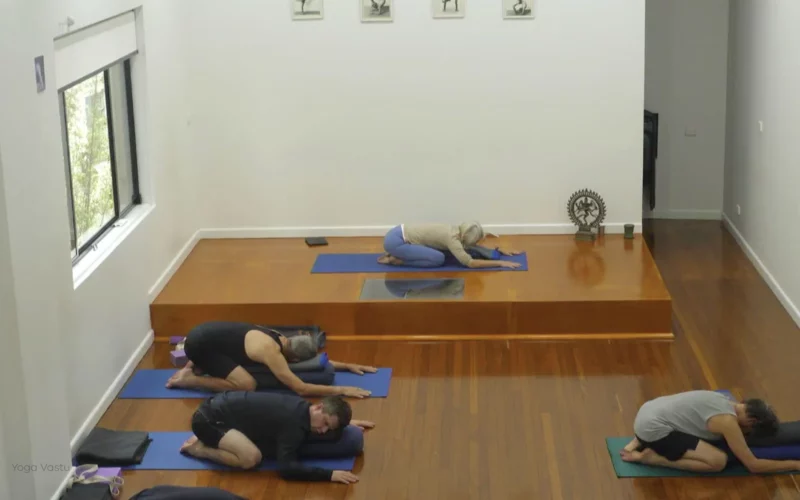
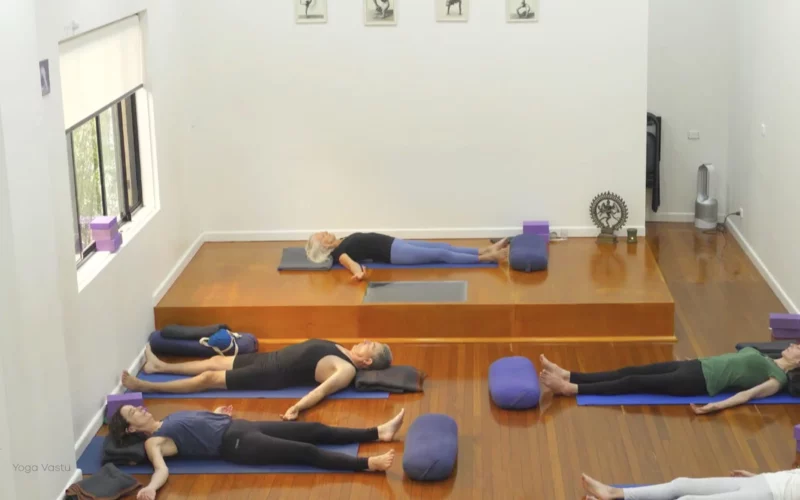
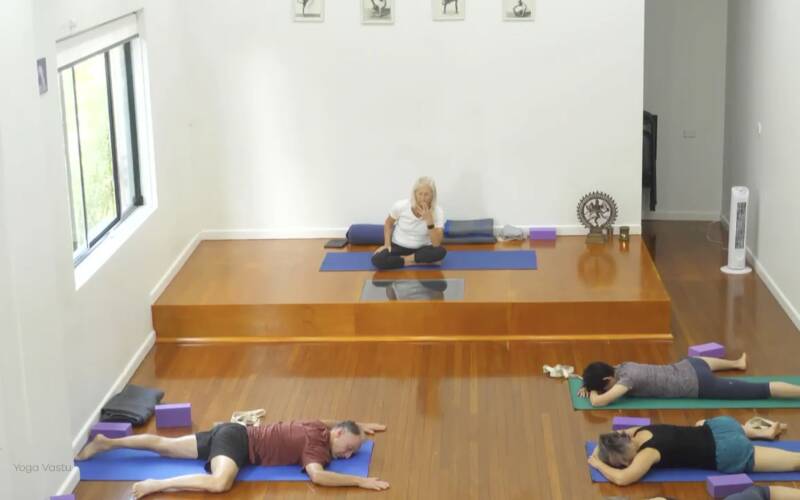
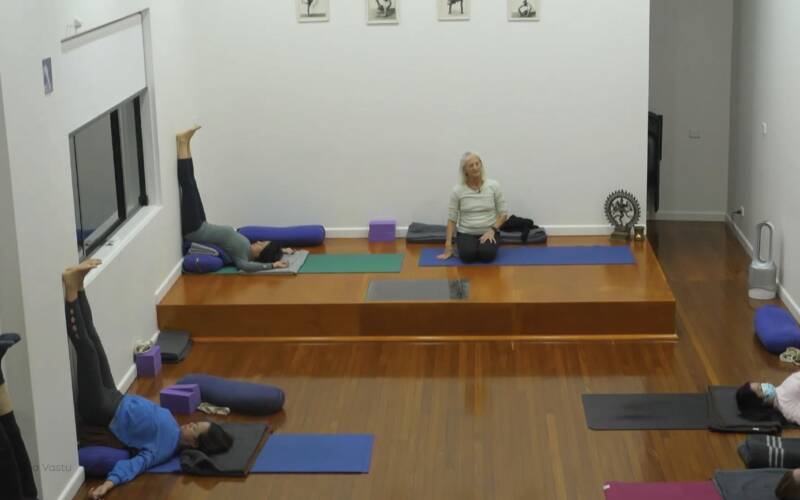
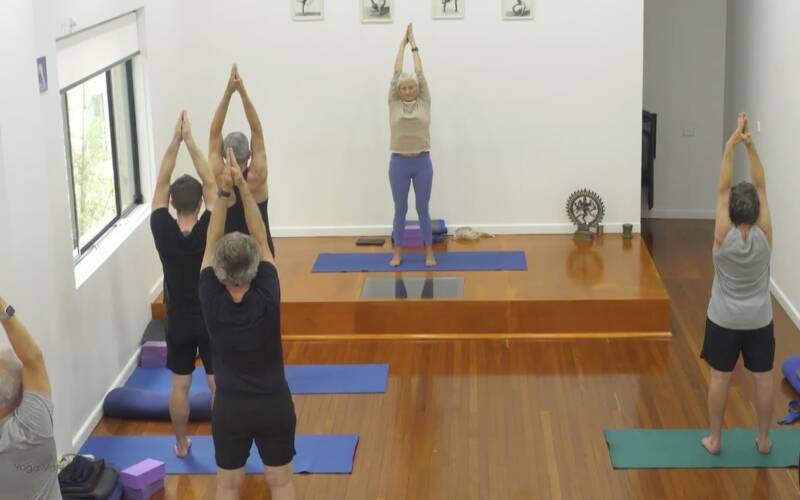
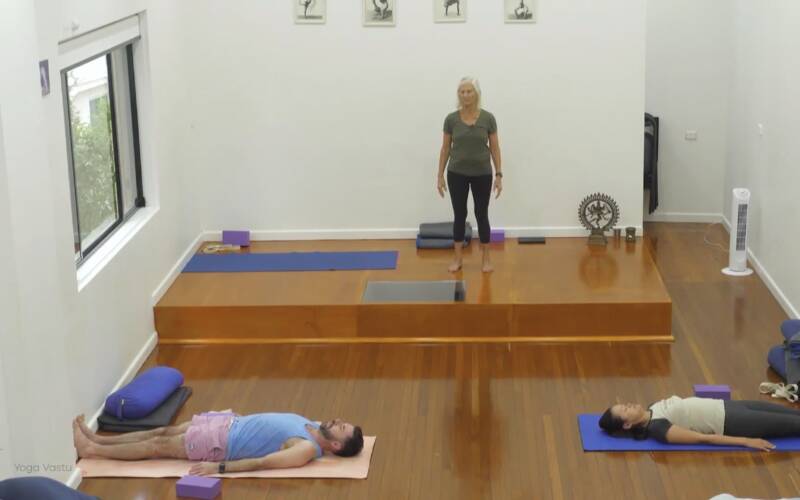
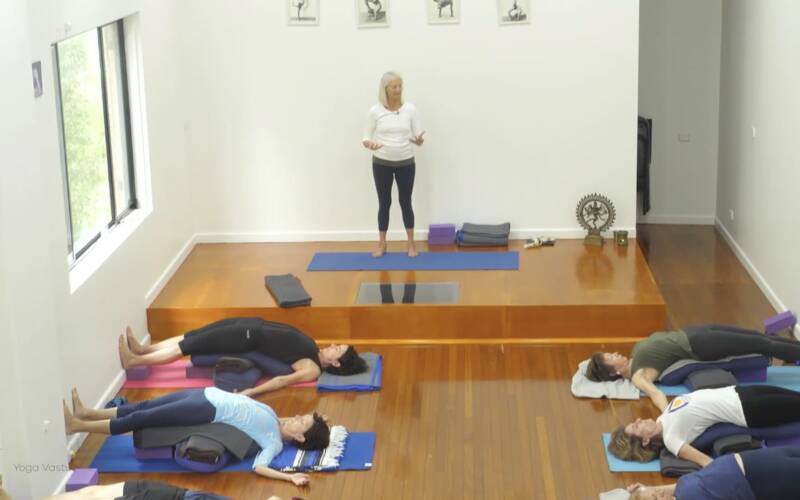
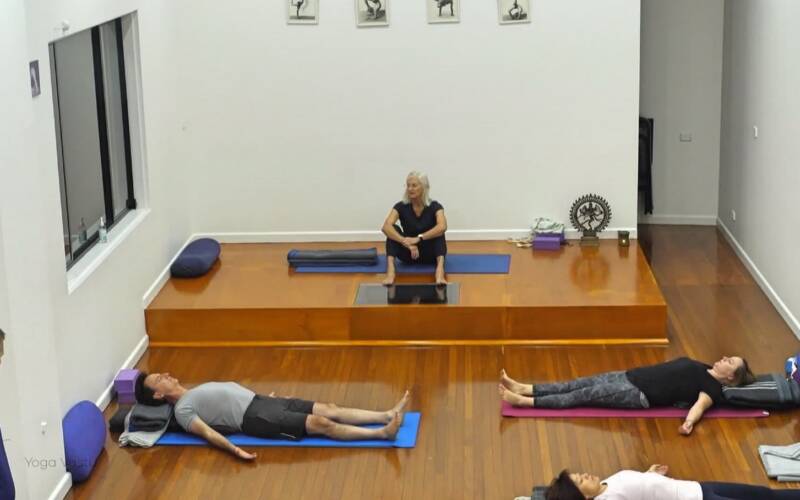
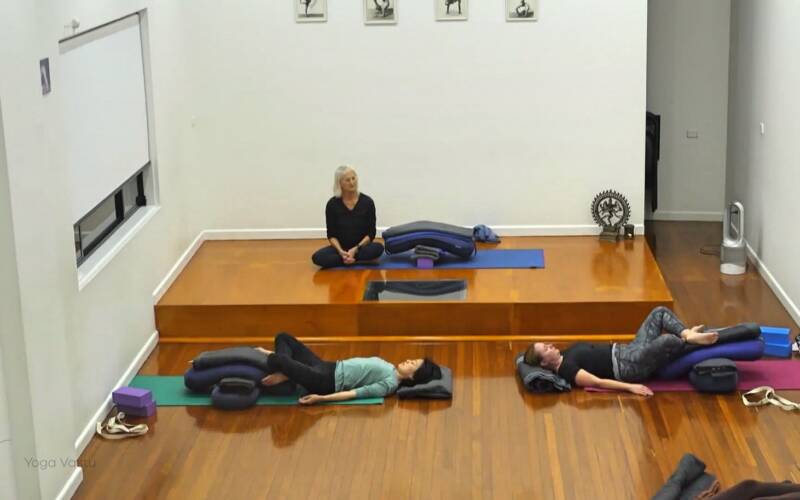
Advanced Class 8: Shifting the Focus Inwards in Restorative Poses
Restorative and pranayama classes have the same function as sleeping and dreaming: they help us assimilate information absorbed during our more dynamic practice.
Found 56 results, page 1 of 3
Restorative and pranayama classes have the same function as sleeping and dreaming: they help us assimilate information absorbed during our more dynamic practice.
A restorative and pranayama class to give yourself a chance to turn down the volume and reset.
Guruji once said, "Don't try to dictate the breath but observe what each pose gives to the breath." We explore this here.
Yoga can be seen as the practice of getting out of one's own way. In this restorative and pranayama class, we explore this concept.
Deepen your practice through extended timings, supported poses, and advanced breath techniques.
A session where we will explore how the use of props can help us move deeper into the lower back.
We will have a longer warm-up at the start of this pranayama class to help students work into the hips and shoulders.
A classic restorative and pranayama sequence for advanced students with a focus on shoulder and chest opening.
A well-balanced restorative sequence for Level 3 students with a slightly longer and more dynamic asana practice than normal.
A restorative session for Level 1/2 students to learn how to retain an aware and quiet mind in restful postures.
A restorative Iyengar yoga class for higher-level students, as well as teachers and those in teacher training.
A short class to introduce students to the benefits of regular restorative and pranayama practice.
In this restorative class we will focus on releasing tension and getting back in touch with our bodies so as to better observe what benefits restorative poses and guided meditation will bring.
A great, relatively short, session for when you're feeling low on energy and motivation.
A deep restorative practice focussing on extended pose holds and systematic sequencing, developing inner awareness and mindful breathing.
A basic level restorative class with a brief asana practice followed by guided meditation.
A deeply relaxing pranayama session with guided meditation in both seated and supine positions.
A session aiming to help release tightness in the shoulders and neck.
A stress-releasing session for general-level students that can be practiced at the end of a tiring day or after a long car ride or trip.
This class focusses on releasing tension in such areas as the lower back, the neck and shoulders, the hips and legs.
After a relatively intense asana practice with a focus on inversions, we settle in for about an hour of contemplation in more static, less strenuous poses aimed at grounding us and bringing more awareness to our practice.
In this class, we will be working on entering into a seated meditation session in a smooth way, through an asana practice focussed on strengthening the necessary foundations.
A relaxing sequence especially suited for the menstrual cycle and for dealing with menstrual cramps.
A pranayama class to help students regain a sense of novelty in restorative poses through the use of props and observation.
Pranayama the practice of breath control. It is a practice aimed at strengthening the mind-body connection. Throughout the day, our breathing pattern is irregular. The quality of our breath depends on what we are doing. When you’re in a hurry or stressed, the breath becomes shorter. When you are in neutral situations, the breath becomes more regular. When you are sleeping, you usually take longer, deeper breaths.
In our everyday lives, we don’t pay attention to the breath. Most of the time we take shallow breaths into the lungs. This is called chest breathing. Abdominal breathing or diaphragmatic breathing is when we breathe into the stomach. We rarely do this.
The aim of pranayama is to teach us to guide our breath and to breathe deeper. It unlocks our ability to practice conscious breathing.
Pranayama focuses on changing your breathing pattern in a way that suits your body’s needs. By breathing consciously, you supply the body with oxygen, improve organ function, enhance clarity of thought, and reestablish the connection between the body and soul. Remember: in many ancient religious and mystical traditions, the words for breath and soul are practically synonymous.
Restorative yoga usually goes hand in hand with pranayama. It is a type of practice that helps heal the body and relax the mind. Sometimes a yoga sequence will end in several restorative poses: Supta Baddha Konasana (Reclining Bound Angle Pose), Supta Virasana (Reclining Hero Pose), or Viparita Karani (Legs Up the Wall Pose). Yoga classes end in Savasana (Corpse Pose) – the most iconic restorative asana.
Restorative asanas can be practiced on your restorative day during a restorative session. Like in any sport, the body needs time to recover. In a restorative sequence, you give your body a chance to relax. Meanwhile, the mind is focused and aware. It has time to notice and appreciate how the body feels. Restorative asanas help you achieve equilibrium and balance between body and mind. In restorative yoga, you can assess the benefits of your practice.
In traditional practice, pranayama is practiced in the early morning, before sunrise. But other times are also possible: in the early evening, after your regular session, or before bedtime.
Traditionally, pranayama comes after asana practice. Asanas prepare your mind for deeper inward focus. Each asana requires concentration from the yoga student. Yoga practice calms the normally chaotic mind. It channels and directs thoughts toward the present.
Many feel sleepy after eating. Blood flows to the stomach to ease digestion and this causes sluggishness. The result is trouble concentrating. This is why pranayama is not practiced after meals.